
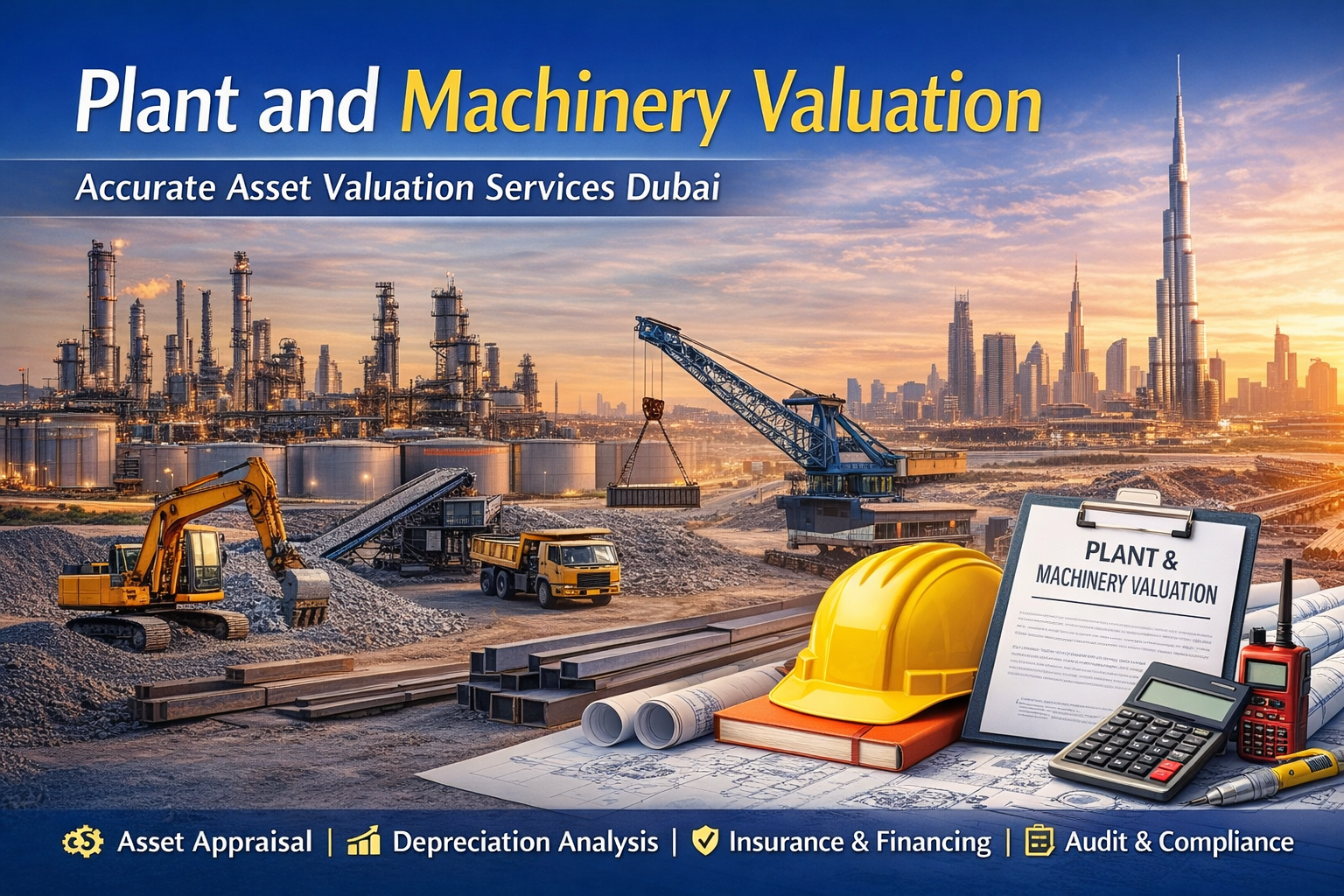
Industrial and commercial operations rely heavily on plant and machinery to maintain productivity and operational efficiency. These assets often represent a significant portion of a company’s total capital investment. A professional plant and machinery valuation provides an accurate understanding of asset worth, supporting informed decisions related to financial reporting, lending, insurance, mergers, and strategic planning.
Unlike real estate valuation, machinery and equipment valuation requires specialized technical knowledge of engineering systems, operational life cycles, and industry-specific standards. From manufacturing plants and power facilities to logistics hubs and construction equipment, plant and machinery assets vary widely in function and complexity. A structured valuation process ensures transparency, regulatory compliance, and long-term financial stability.
This blog explores the importance of plant and machinery valuation, its applications across industries, and how professional valuation services support business growth and risk management.
Understanding Plant and Machinery Valuation
Plant and machinery valuation is the process of determining the current economic value of industrial equipment and operational assets. These assets include manufacturing machinery, processing plants, power generation units, heavy construction equipment, and specialized technical systems.
Valuation takes into account multiple factors such as:
- Asset age and remaining useful life
- Operational condition and maintenance history
- Technological relevance and obsolescence
- Market demand and resale potential
- Replacement and depreciation costs
The objective is not just to calculate a figure but to provide a defensible and professionally recognized value that can be used for accounting, legal, and commercial purposes.
Plant and Machinery Valuation Services
Professional plant and machinery valuation services offer structured and independent assessments tailored to business needs. These services are widely used for:
- Financial reporting and audit compliance
- Loan security and mortgage purposes
- Insurance coverage and claim settlement
- Mergers and acquisitions
- Asset restructuring and liquidation
- Taxation and statutory compliance
Valuers conduct physical inspections, review technical documentation, and apply recognized valuation methodologies such as cost approach, market comparison, and income-based analysis. Their reports provide clarity and confidence for stakeholders including investors, banks, insurers, and regulatory authorities.
Plant and Machinery Valuation Dubai
The industrial sector in plant and machinery valuation dubai has grown rapidly due to expansion in manufacturing, logistics, construction, and energy infrastructure. With large-scale projects and international investments, accurate valuation of machinery assets has become essential.
Dubai’s regulatory environment requires transparent and professional valuation reports for:
- Corporate financial disclosures
- Banking and finance transactions
- Asset transfers and restructuring
- Compliance with international accounting standards
Industrial operators in Dubai must ensure their machinery assets are valued by qualified professionals who understand both engineering systems and market conditions. This reduces disputes, supports negotiations, and improves overall asset governance.
Asset Lifecycle and Depreciation Analysis
A critical part of plant and machinery valuation is lifecycle assessment. Machinery assets have finite operational lives and gradually lose value due to wear, technological advancement, and changes in production methods.
Lifecycle analysis includes:
- Estimating remaining useful life
- Calculating depreciation rates
- Identifying obsolete or underperforming assets
- Forecasting replacement costs
This information helps businesses plan capital expenditures and avoid unexpected financial strain. It also ensures that financial statements reflect realistic asset values rather than outdated book figures.
Industrial Equipment Appraisal and Technical Surveys
Technical surveys form the backbone of accurate machinery valuation. These surveys involve on-site inspections of equipment to assess physical condition, efficiency, and compliance with safety standards.
Industrial equipment appraisal focuses on:
- Structural integrity and performance
- Maintenance practices and records
- Operational efficiency
- Environmental and safety compliance
By combining technical inspection with financial analysis, valuers produce reliable reports that reflect both physical and economic realities of the assets.
Financial Reporting and Compliance Standards
Plant and machinery valuation plays a major role in corporate financial reporting. Companies must present accurate asset values in their balance sheets for audit and regulatory compliance.
Valuation reports support:
- Annual financial statements
- Internal audits and external reviews
- Investment disclosures
- Corporate restructuring
Professional valuation ensures alignment with international accounting and valuation standards, reducing the risk of regulatory penalties or financial misrepresentation.
Risk Management and Insurance Planning
Machinery and industrial assets are exposed to risks such as fire, breakdown, theft, and operational failure. Insurance coverage depends heavily on proper valuation.
Through professional plant and machinery valuation services, businesses can:
- Avoid underinsurance or overinsurance
- Establish correct replacement values
- Support insurance claims with documented evidence
- Identify vulnerable assets
This proactive approach strengthens risk management strategies and protects business continuity.
Role in Mergers, Acquisitions, and Business Restructuring
During mergers and acquisitions, plant and machinery valuation becomes a key element of due diligence. Buyers and investors need to understand the true value of operational assets before committing capital.
Valuation helps with:
- Purchase price allocation
- Negotiation support
- Asset segregation
- Post-acquisition financial planning
In restructuring or liquidation scenarios, valuation ensures fair asset distribution and transparency among stakeholders.
ustainability and Technology Impact on Valuation
Modern valuation practices increasingly consider sustainability and technology. Machinery that is energy-efficient, environmentally compliant, and technologically advanced often retains higher value compared to outdated equipment.
Key factors include:
- Energy efficiency ratings
- Compliance with environmental standards
- Automation and digital integration
- Maintenance optimization
These elements influence both current value and long-term performance, making sustainability an important component of modern plant and machinery valuation.
Benefits of Professional Plant and Machinery Valuation Services
Engaging professional valuers provides several advantages:
1. Accuracy and Reliability
Independent assessments ensure fair and realistic asset values.
2. Regulatory Compliance
Valuation reports meet professional and statutory requirements.
3. Improved Financial Planning
Clear asset data supports budgeting and investment decisions.
4. Risk Reduction
Early identification of obsolete or underperforming equipment prevents losses.
5. Enhanced Investor Confidence
Transparent valuation strengthens trust among investors and lenders.
The Future of Plant and Machinery Valuation
As industries adopt smart technologies and automation, valuation practices will continue to evolve. Digital tools, predictive analytics, and data-driven models will enhance accuracy and reporting efficiency.
Future valuation trends include:
- Integration of digital asset registers
- Use of advanced analytics for depreciation modeling
- Sustainability-focused asset evaluation
- Greater reliance on standardized reporting platforms
These advancements will further strengthen the role of plant and machinery valuation in corporate strategy and industrial development.
A professional plant and machinery valuation is more than an accounting requirement—it is a strategic tool for asset management, investment security, and long-term planning. From supporting financial reporting and insurance coverage to enabling mergers and acquisitions, valuation services help businesses understand and protect the true worth of their industrial assets.
With increasing industrial activity and regulatory expectations, accurate valuation has become essential for operational transparency and financial stability. Partnering with an experienced firm like Western Valuers & Surveyors ensures that plant and machinery valuation services are delivered with technical expertise, market insight, and professional integrity, enabling organizations to make confident decisions and maximize the value of their critical assets.
FAQs
1. What is plant and machinery valuation?
Plant and machinery valuation is the process of estimating the current market value of industrial equipment and machinery for financial, insurance, or legal purposes.
2. Why is plant and machinery valuation important?
It helps businesses maintain accurate financial records, secure insurance coverage, support transactions, and comply with accounting and regulatory standards.
3. How often should machinery be valued?
Valuation is typically done annually for financial reporting or whenever there is a major transaction such as acquisition, sale, or insurance renewal.
4. Which valuation methods are used?
Common methods include the cost approach, market comparison approach, and income approach, depending on the asset type and purpose.
5. Is plant and machinery valuation required in Dubai?
Yes, many businesses in Dubai require professional valuation for audits, insurance, financing, and regulatory compliance.
6. What documents are needed for valuation?
Documents may include asset registers, purchase invoices, maintenance records, and operational details.
7. Who can perform plant and machinery valuation?
Qualified professional valuers with engineering and financial expertise should conduct machinery valuation to ensure accuracy and compliance.